The Caribbean lowlands are home to a rich variety of mammals, although many of them are not always easy to observe. Unlike birds, insects, or frogs, mammals are often more secretive. Some are active at night, some avoid open areas, and others move quietly through the forest canopy or dense vegetation.
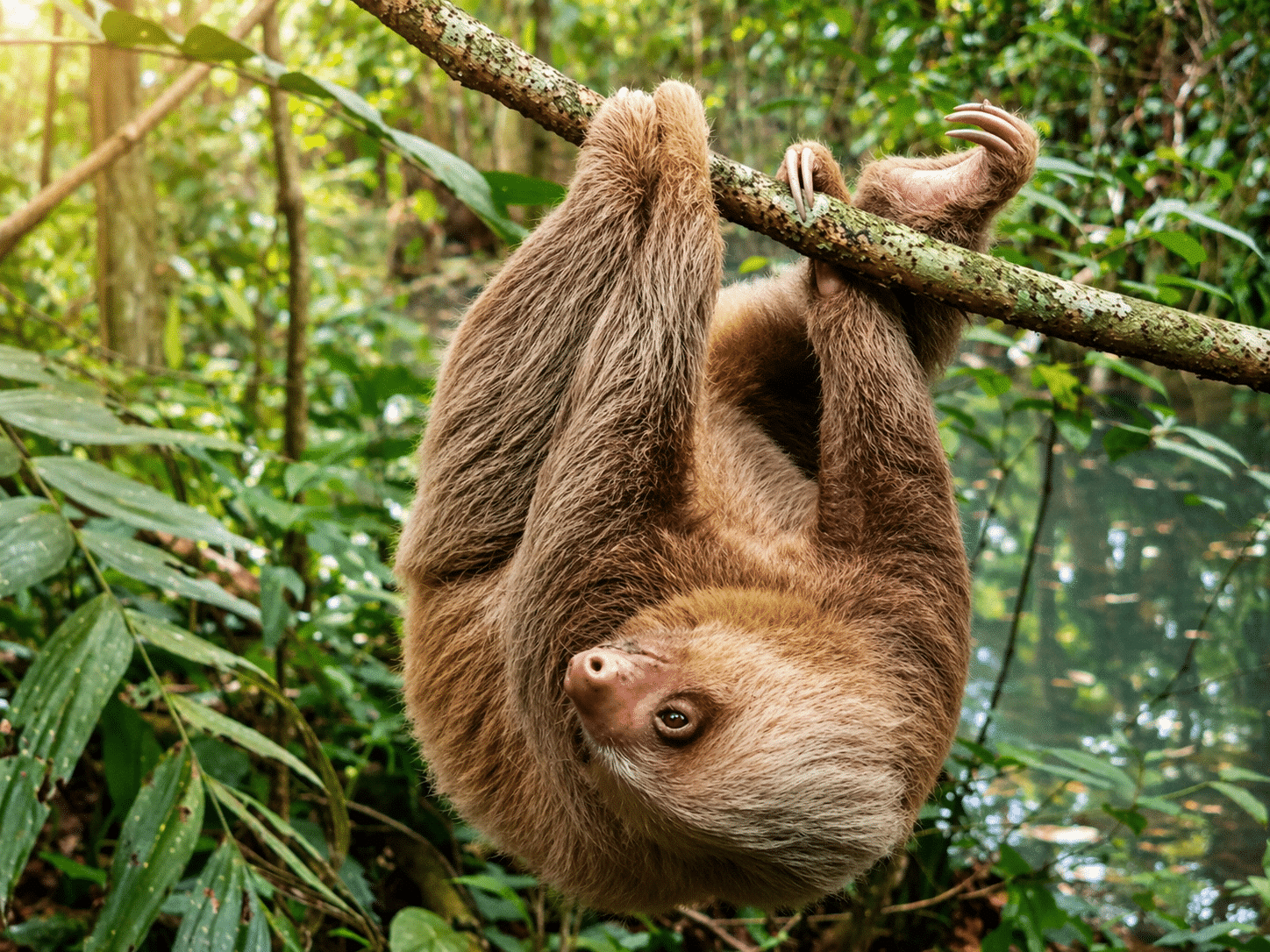
One of the most recognizable mammals in this region is the sloth. Both two-toed sloths and three-toed sloths can be found in the Caribbean lowlands, especially in areas with mature trees, forest edges, gardens, and wildlife corridors. They spend most of their lives in the canopy, feeding on leaves and moving slowly from tree to tree. Because of their calm behavior and excellent camouflage, they can be surprisingly difficult to spot without a trained eye.
The forests are also home to different species of monkeys, including howler monkeys, white-faced capuchin monkeys, and in some areas spider monkeys. Howler monkeys are often heard before they are seen, especially early in the morning when their deep calls travel through the forest. Capuchin monkeys are more active and curious, often moving in groups while searching for fruit, insects, and small animals. Spider monkeys depend on larger forest areas and are an important sign of healthy rainforest habitat.
Other mammals are present but much more difficult to see. Agoutis are commonly found on the forest floor, where they feed on seeds, fruits, and fallen vegetation. They play an important role in seed dispersal, helping the forest regenerate naturally. Coatis may also be seen moving through the forest in search of insects, fruits, and small animals, often using their long noses to investigate the ground.
At night, the Caribbean lowlands become active with more secretive species. Kinkajous, opossums, bats, and other nocturnal mammals move through the trees and forest understory. Bats are especially important because they help control insects, pollinate flowers, and disperse seeds. Although they are often overlooked, they are one of the most diverse and ecologically important mammal groups in tropical forests.
Larger mammals also live in the region, but they are rarely seen by visitors. Species such as tayras, collared peccaries, deer, ocelots, jaguars, and pumas may occur in protected areas and forest corridors. These animals usually avoid humans and are mostly active at night or in remote parts of the forest. Their presence is often detected through footprints, camera traps, or other signs rather than direct sightings.
This makes mammal watching in the Caribbean lowlands especially interesting. Some species can be seen during a guided walk, while others remain hidden but still play a vital role in the ecosystem. Every sound in the canopy, movement in the leaves, or footprint on a muddy trail can reveal the presence of wildlife. For visitors, patience and quiet observation are key to discovering the mammals that make this region so special.
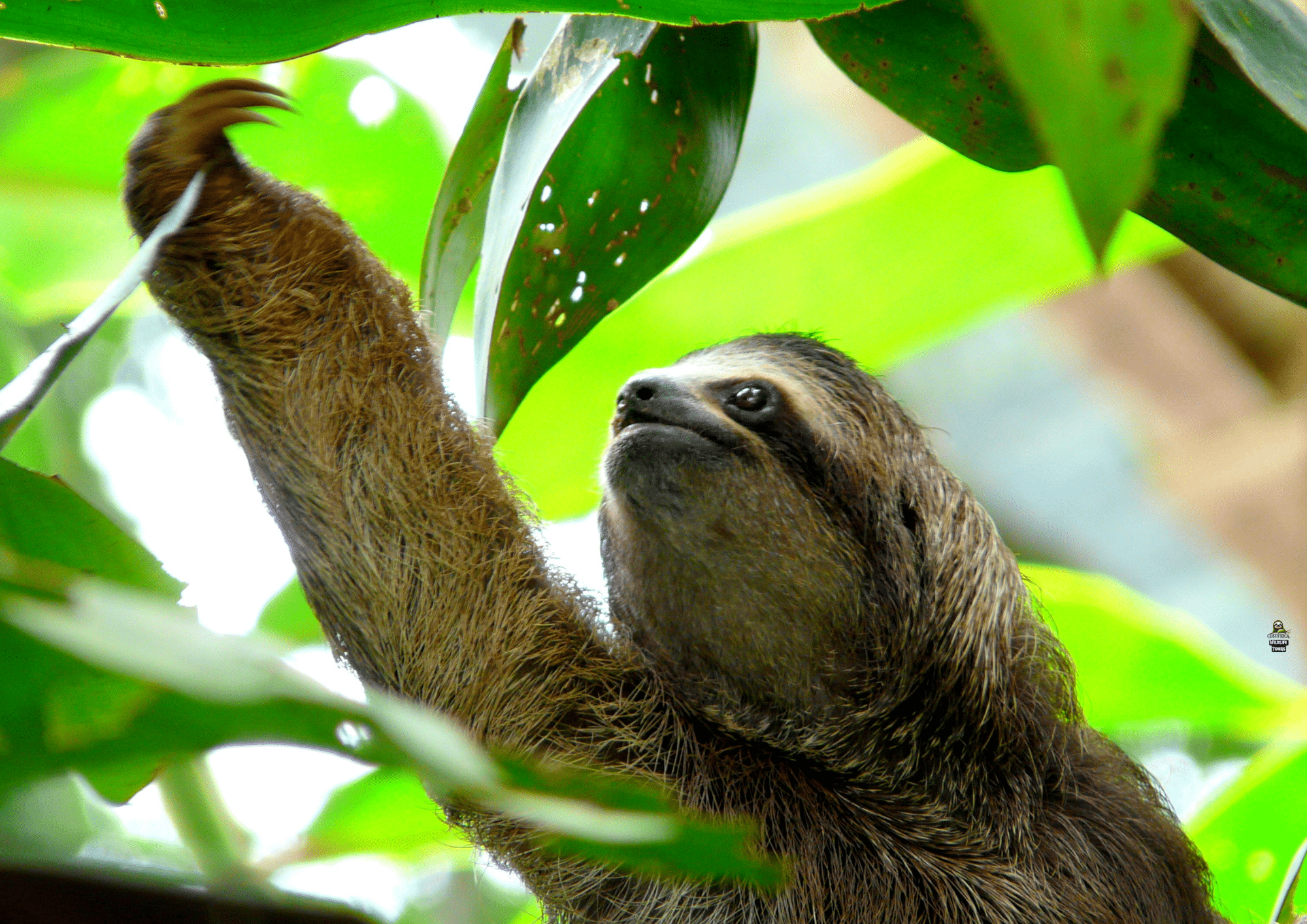 Sloths are among the most beloved animals in Costa Rica and one of the most iconic mammals of the Caribbean lowlands. In forested areas such as Cahuita, Puerto Viejo, Manzanillo, Sarapiquí, and Tortuguero, visitors may see them resting in trees, feeding on leaves, or slowly moving through the canopy.
Costa Rica is home to two species of sloths, and both can be found in the Caribbean lowlands: the Hoffmann’s two-fingered sloth (Choloepus hoffmanni) and the brown-throated three-fingered sloth (Bradypus variegatus). These are the only two sloth species naturally found in Costa Rica.
The brown-throated three-fingered sloth is often easier to observe during the day. It has a rounded face, a darker “mask” around the eyes, and a calm expression that many people associate with sloths. This species is usually seen high in the canopy, where it feeds mainly on leaves from trees such as cecropia and other rainforest plants. Although sloths are famous for moving slowly, their slow lifestyle is an important survival strategy that helps them conserve energy and remain less noticeable to predators.
The Hoffmann’s two-fingered sloth is generally more nocturnal, which means it is more active at night and can be harder to spot during the day. It is usually larger than the three-fingered sloth and has a shaggier appearance, a longer snout, and two fingers on each front limb. During the day, it is often found curled up and sleeping among branches, vines, and dense foliage.
Sloths are easier to spot with the help of a naturalist guide because they blend perfectly with branches, leaves, and vines. Their fur can sometimes host algae, which gives them a greenish tone and helps them camouflage in the forest canopy. A trained guide can often recognize their shape, posture, or feeding trees from a distance, even when they are hidden high above the trail.
Sloths spend most of their lives in the trees. They feed mainly on leaves, move slowly to conserve energy, and descend to the ground only occasionally. Because they are not fast animals, they depend heavily on camouflage, canopy cover, and healthy forest habitat for protection. This makes the Caribbean lowlands an excellent region for sloth observation, especially in areas with mature trees, forest corridors, and protected habitats.
In the Caribbean region, sloths are commonly seen near national parks, wildlife corridors, gardens with native trees, and forest edges. Cahuita National Park, Tortuguero, Gandoca-Manzanillo, and the coastal forests around Puerto Viejo are all good areas where visitors may have a chance to observe them.
For responsible wildlife viewing, visitors should keep a respectful distance, avoid touching or feeding sloths, and never disturb them for photos. Sloths may look relaxed, but they are wild animals and can become stressed when people get too close. Observing them quietly in their natural habitat is the best way to enjoy one of Costa Rica’s most fascinating rainforest mammals.
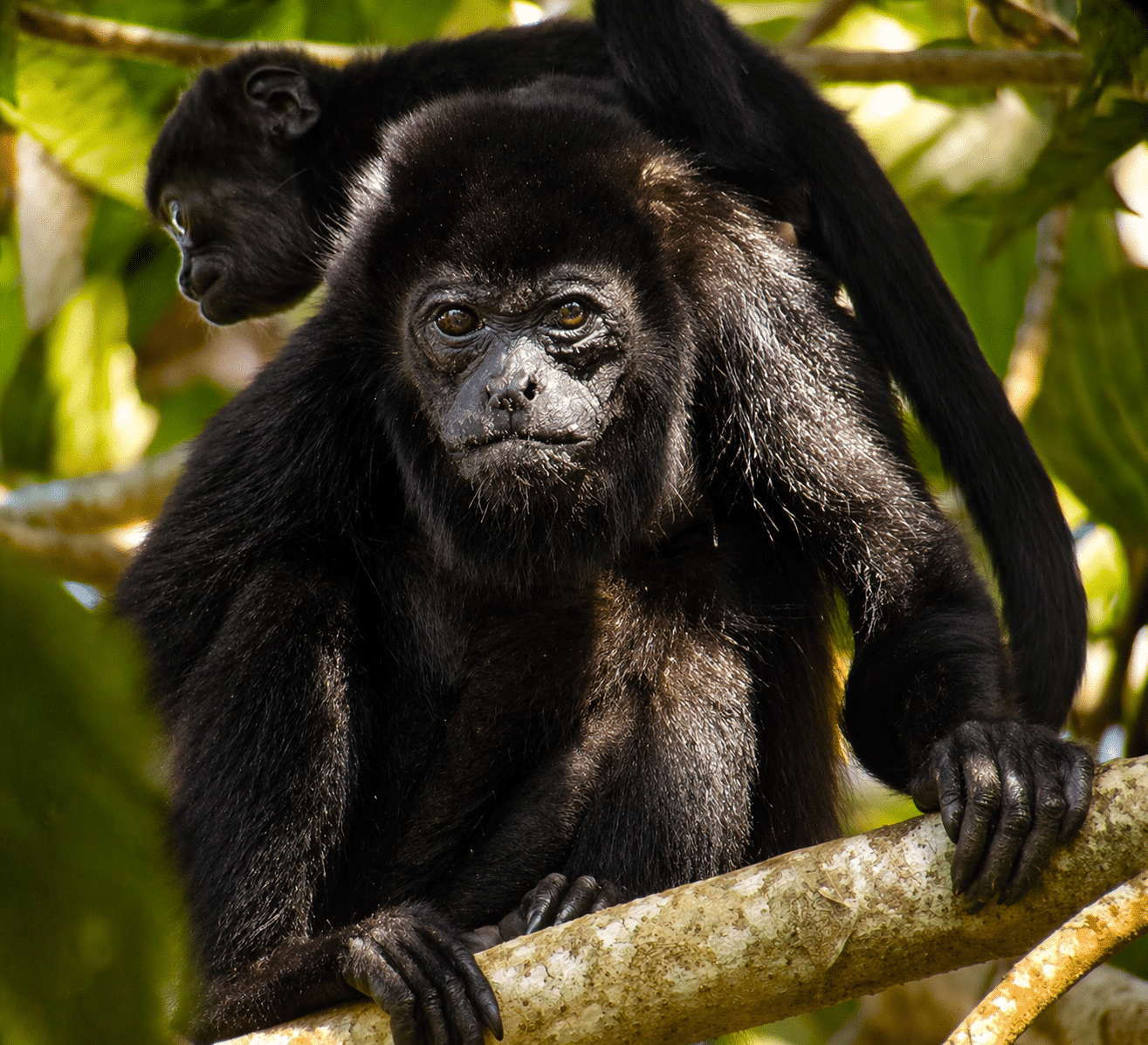
The Caribbean lowlands are excellent for observing monkeys, especially in forested areas such as Cahuita, Puerto Viejo, Manzanillo, Sarapiquí, and Tortuguero. Costa Rica is home to four native species of monkeys, but on the Caribbean side visitors can normally encounter three of the four species: the mantled howler monkey, the white-faced capuchin monkey, and Geoffroy’s spider monkey. The fourth species, the Central American squirrel monkey, is mainly restricted to parts of the Central and South Pacific region of Costa Rica, especially around Manuel Antonio, Quepos, and the Osa Peninsula.
The mantled howler monkey (Alouatta palliata) is one of the most common and recognizable primates in the Caribbean lowlands. Howler monkeys are often heard before they are seen. Their deep, powerful calls can travel long distances through the forest and are one of the most iconic sounds of the Costa Rican rainforest. These calls are commonly heard early in the morning, during changes in weather, or when different groups communicate across the forest. Howler monkeys usually move slowly through the canopy and feed mainly on leaves, fruits, and flowers.
The white-faced capuchin monkey (Cebus imitator) is another species frequently observed in places like Cahuita and Tortuguero. Capuchins are active, intelligent, and curious primates that often move in groups through the forest canopy. They have a varied diet that may include fruits, insects, small animals, eggs, and other forest resources. Because of their intelligence and adaptability, they are often seen exploring different levels of the forest and sometimes near trails or forest edges.
In larger and more continuous forest areas of the Caribbean lowlands, visitors may also encounter Geoffroy’s spider monkey (Ateles geoffroyi). Spider monkeys are more dependent on healthy, connected forests and are usually less common than howler monkeys or capuchins. They are recognized by their long arms, slender bodies, and prehensile tails, which they use like an extra limb when moving through the canopy. Sightings depend on location, habitat quality, food availability, and luck.
Monkeys play an important ecological role in the rainforest. As they travel through the canopy feeding on fruits, they help disperse seeds and support forest regeneration. They are also an important indicator of habitat health: areas with continuous forest, fruiting trees, and protected corridors usually offer better chances of observing a greater diversity of primates.
For visitors, the best way to observe monkeys is to walk slowly, listen carefully, and look for movement in the canopy. Early morning and late afternoon are often good times for wildlife activity. It is also important to keep a respectful distance, avoid feeding them, and never try to touch or attract them. Feeding monkeys can change their natural behavior, affect their health, and create problems between wildlife and people.
In the Caribbean lowlands, seeing or hearing monkeys is often one of the highlights of a rainforest experience. Whether it is the powerful roar of a howler monkey at sunrise, a group of capuchins moving quickly through the trees, or the rare sight of spider monkeys crossing the canopy, these primates are an essential part of Costa Rica’s tropical forest wildlife.
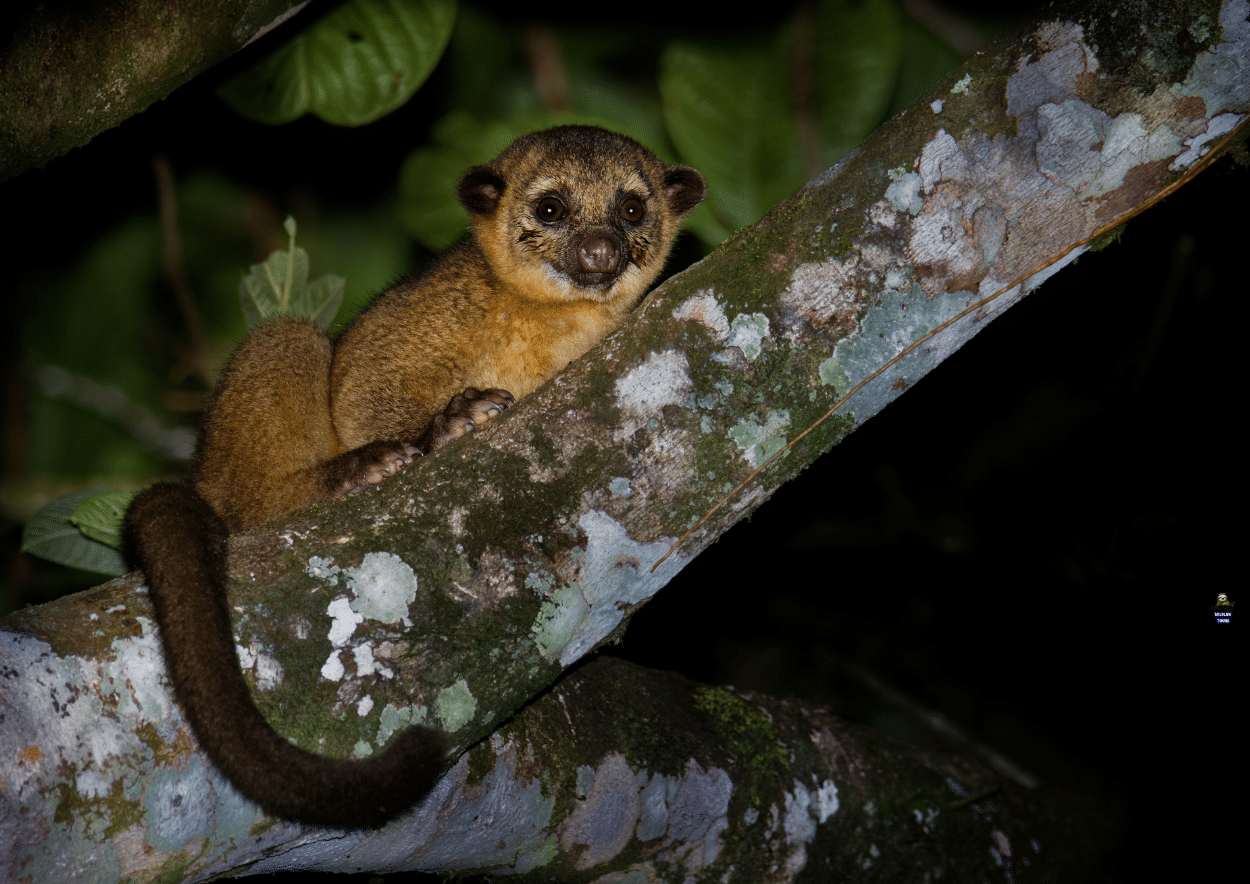
Beyond monkeys and sloths, the Caribbean lowlands of Costa Rica are home to a rich variety of mammals, including coatis, raccoons, kinkajous, agoutis, opossums, bats, armadillos, anteaters, wild cats, peccaries, deer, and even Baird’s tapirs in larger protected forest areas.
Costa Rica has recorded around 271 mammal species nationwide, and the Caribbean lowlands are one of the country’s richest regions for mammal diversity. Exact numbers vary depending on the area, but important Caribbean lowland sites show how diverse this region is: Tortuguero National Park has around 138 mammal species, while the La Selva–Braulio Carrillo forest complex has documented more than 140 mammal species, including many bats and small mammals. For this reason, it is accurate to say that the Caribbean lowlands can support well over 100 species of mammals, especially where rainforest, wetlands, rivers, and biological corridors remain protected.
Some of the mammals visitors may notice more easily are white-nosed coatis and raccoons. Coatis may be seen walking along trails, forest edges, gardens, or coastal areas, often searching for fruits, insects, small animals, and other food on the ground. Raccoons are also adaptable and may be found near mangroves, beaches, rivers, and forest borders, especially in areas where food is available.
The Central American agouti is another important mammal of the Caribbean lowlands. This large rodent is usually active during the day and is often seen moving quietly on the forest floor. Agoutis feed on fruits, seeds, and fallen nuts, and they play an important ecological role because they help disperse and bury seeds, supporting forest regeneration.
At night, the forest becomes active with more secretive mammals. Kinkajous are nocturnal tree-dwelling mammals related to raccoons. They move through the canopy feeding on fruits, nectar, and sometimes insects. Because they are active after dark and usually stay high in the trees, they are more likely to be seen during a guided night walk.
Opossums are also common but often overlooked. They are mostly nocturnal and very adaptable, feeding on fruits, insects, small animals, and other available food. In the Caribbean lowlands, different species of opossums may occur, from larger common opossums to smaller, more secretive species.
Bats represent one of the most diverse groups of mammals in Costa Rica and are especially important in the Caribbean lowland ecosystem. Many bat species feed on insects, helping control insect populations, while others feed on fruit or nectar and contribute to seed dispersal and pollination. In tropical forests, bats are essential for maintaining healthy ecosystems, even though many visitors rarely notice them.
Visitors should never feed wildlife. Feeding animals changes their natural behavior, can make them lose their natural fear of people, may cause aggressive behavior, and can harm their health. Human food is not part of their natural diet and can create serious problems for both wildlife and local communities.
The best way to observe mammals in the Caribbean lowlands is to walk slowly, stay quiet, look carefully at both the forest floor and canopy, and visit different habitats at different times of day. Early morning, late afternoon, and guided night walks often provide some of the best opportunities to observe mammals in a responsible and respectful way.
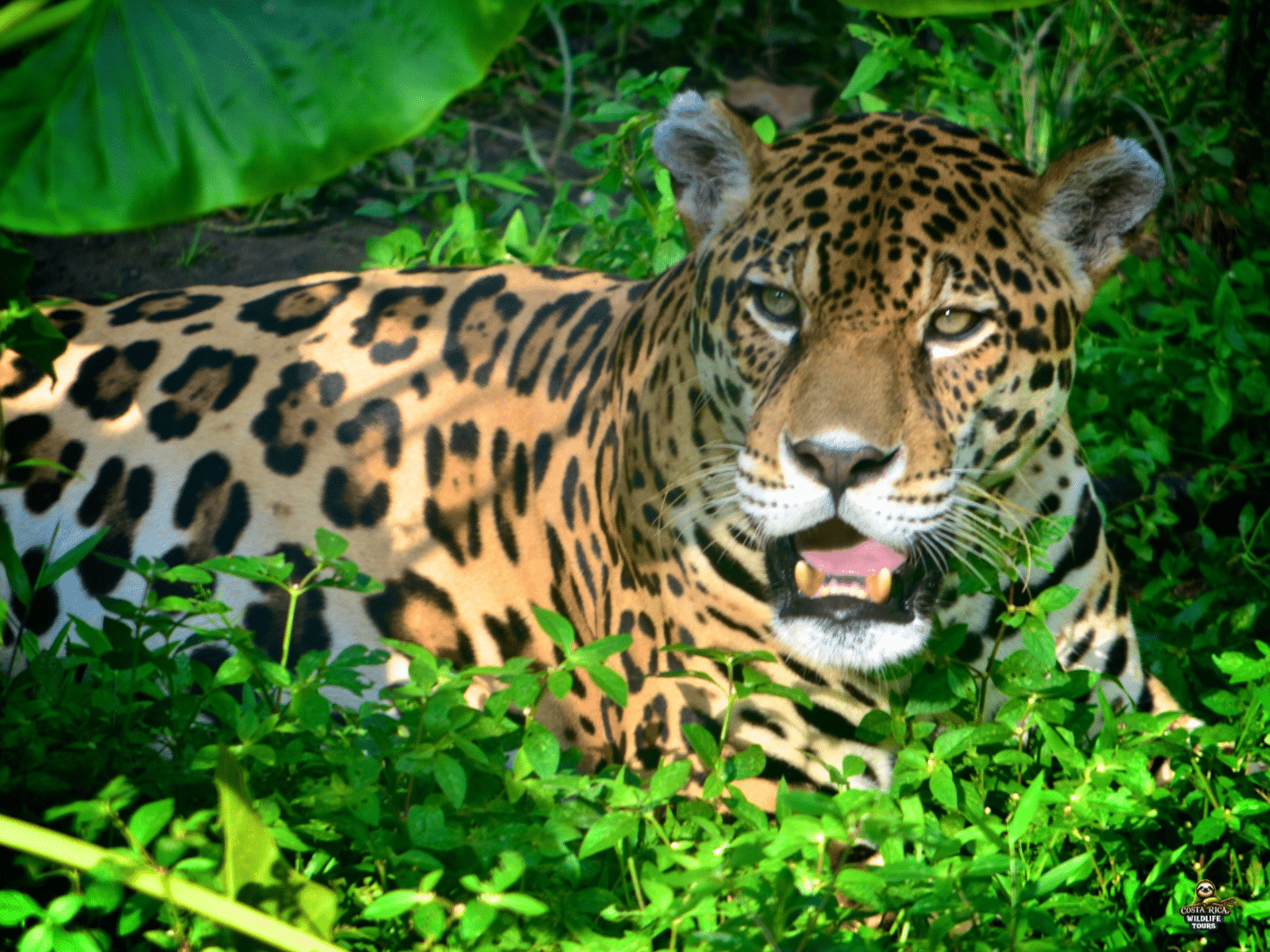
The Caribbean lowlands also provide habitat for some of Costa Rica’s most impressive and elusive mammals, including ocelots, margays, pumas, jaguars, jaguarundis, and oncillas. These wild cats are very important ecologically, but they are rarely seen by visitors because they are naturally shy, mostly nocturnal or crepuscular, and require healthy forest habitat to survive.
Costa Rica is home to six native species of wild cats, and several of them occur in the Caribbean lowlands, especially in larger protected areas and forest corridors such as Tortuguero, Barbilla, Hitoy-Cerere, Gandoca-Manzanillo, La Selva, and the broader Talamanca region.
The jaguar (Panthera onca) is the largest wild cat in the Americas and the top predator in Costa Rica’s tropical forests. In the Caribbean lowlands, jaguars are especially important in remote forest and wetland ecosystems, where they help regulate prey populations and maintain ecological balance. In places like Tortuguero, jaguars are known to use beach and forest habitats, but sightings are extremely rare.
The puma (Puma concolor) is another large predator found in Costa Rica. Pumas are highly adaptable and can live in different habitats, from lowland rainforest to mountain forests, as long as there is enough cover and prey. Like jaguars, they are usually detected through tracks, camera traps, or indirect signs rather than direct sightings.
Smaller wild cats also live in the Caribbean lowlands. The ocelot (Leopardus pardalis) is the most commonly recorded small wild cat in many tropical forest areas, although visitors rarely see it. The margay (Leopardus wiedii) is especially adapted to life in the trees and is known for its excellent climbing ability. The jaguarundi (Herpailurus yagouaroundi) is more slender and may sometimes be active during the day, but it is still uncommon to observe. The oncilla (Leopardus tigrinus) is one of the smallest and most secretive wild cats in Costa Rica and is more often associated with higher elevation forests, although records may vary by region.
These predators play an essential role in the rainforest ecosystem. By hunting mammals, birds, reptiles, and other prey, they help maintain balance within the food web. Their presence is also a sign of habitat quality, because wild cats need forest cover, prey availability, and safe corridors to move between protected areas.
In most cases, travelers are more likely to see tracks, scratches, scat, camera-trap images, or other signs of these animals than the animals themselves. A footprint in the mud, a camera-trap photo, or a story from local guides is often the closest glimpse visitors get of these secretive predators.
For wildlife lovers, simply knowing that these cats still move through the forests of the Caribbean lowlands adds a special sense of wildness to the experience. Their survival depends on protecting large areas of rainforest, maintaining biological corridors, reducing hunting, and supporting responsible tourism that values living ecosystems rather than close encounters.
The warm, humid environment of Costa Rica’s Caribbean lowlands is excellent for reptiles. The combination of rainforest, rivers, wetlands, gardens, coastal forest and sunny forest edges provides ideal conditions for many species to live, feed and reproduce.
Some of the most commonly observed reptiles in the region include basilisks, iguanas, anoles, geckos, turtles and snakes. Reptiles are especially important in the tropical ecosystem because they help control populations of insects, frogs, rodents and other small animals, while also serving as food for birds, mammals and larger predators.
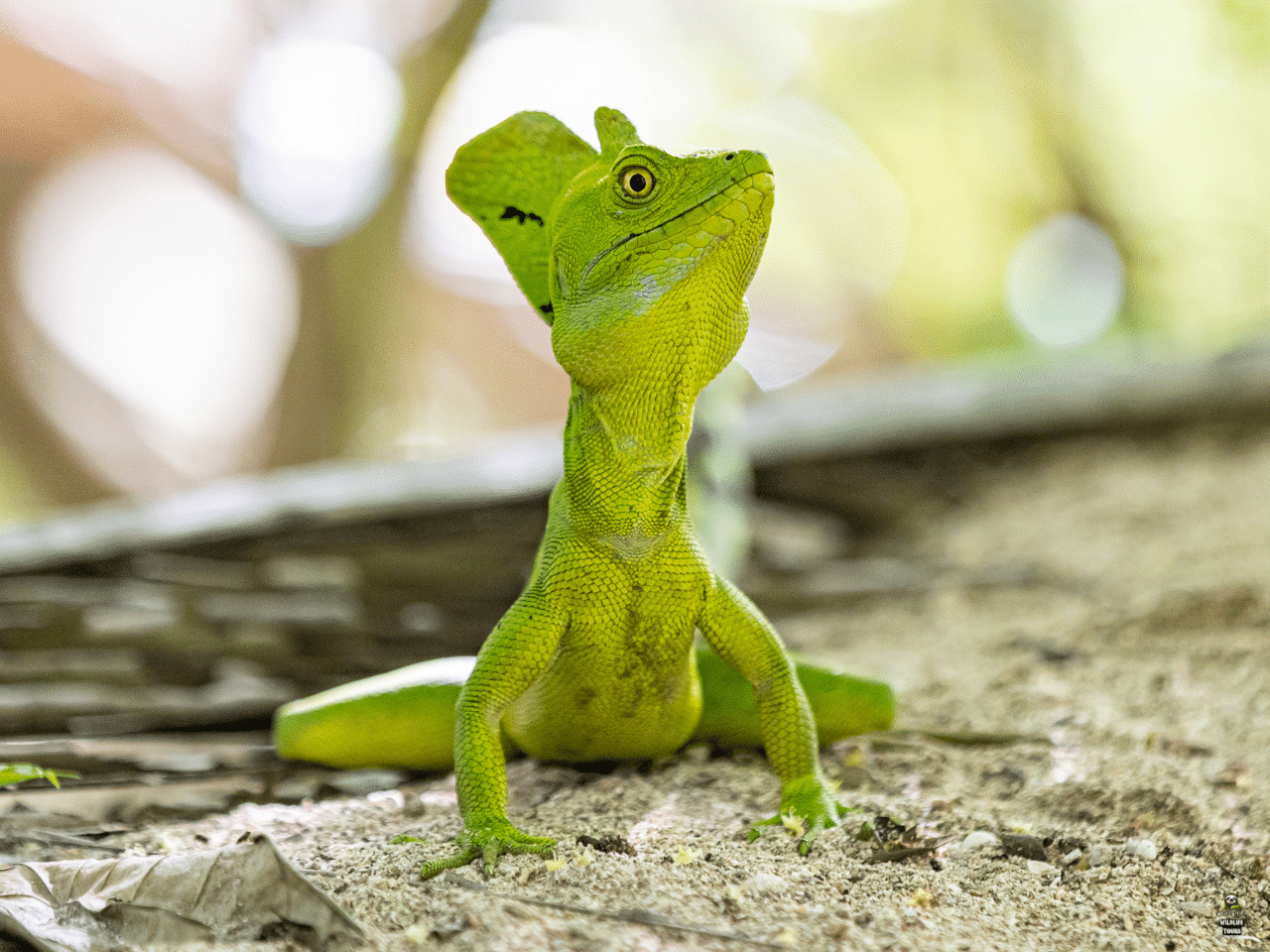
Basilisks are among the most recognizable lizards of the Caribbean lowlands. Species such as the Green Basilisk and Brown Basilisk are often found near streams, ponds, rivers, lagoons and wet forest edges. They are sometimes called “Jesus Christ lizards” because they can run across the surface of water for short distances when escaping from predators.
Iguanas are also common in the region, especially in open areas, gardens, river edges, coastal vegetation and forest borders. The Green Iguana is one of the best-known reptiles in Costa Rica. These large lizards spend much of their time basking in the sun, resting on branches or feeding on leaves, flowers and fruits.
Visitors may also notice smaller lizards such as anoles and geckos. Anoles are often seen on tree trunks, leaves, fences and garden plants, while geckos are commonly active at night and may be found around lights, buildings and forest edges where insects are abundant.
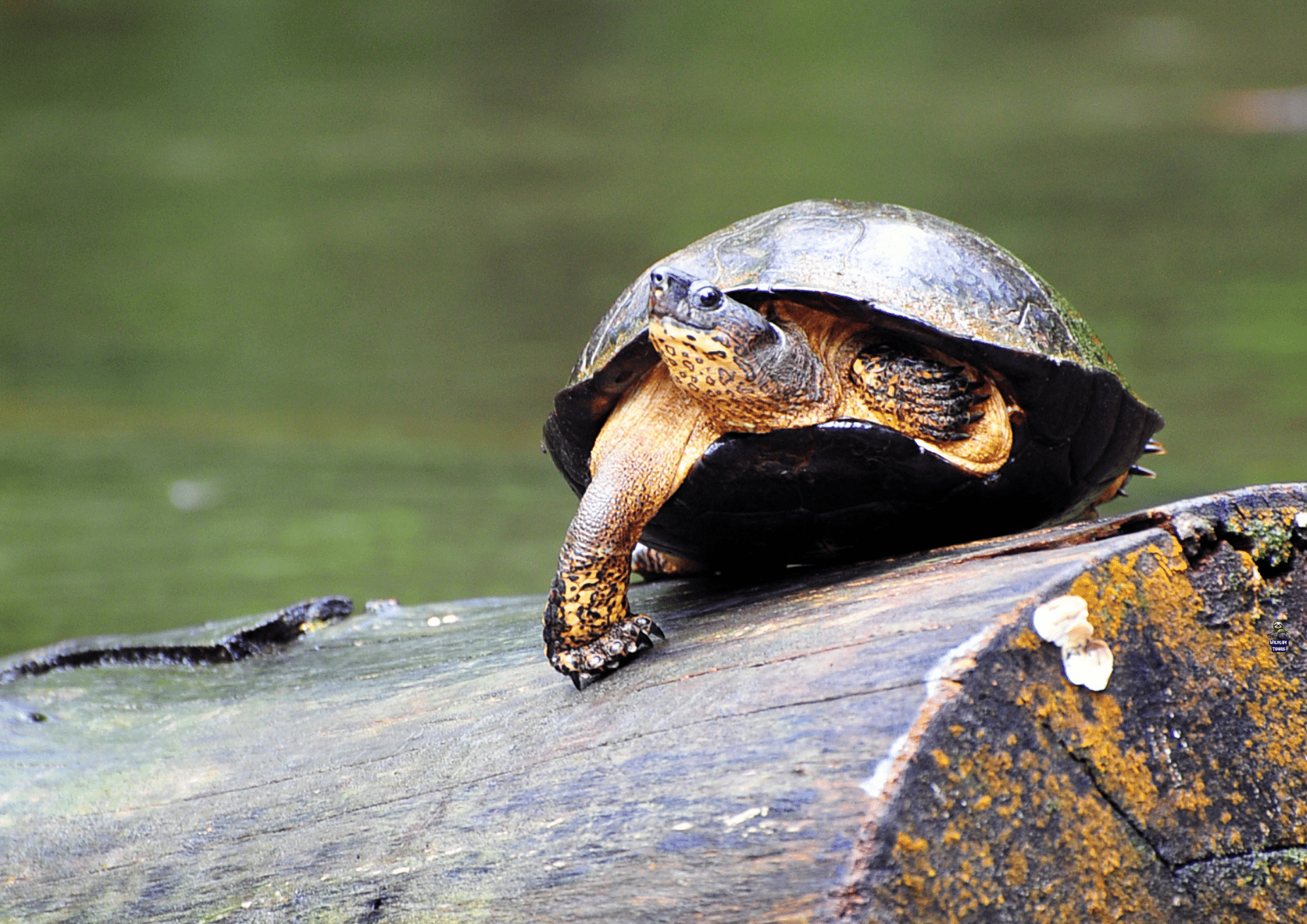
The Caribbean lowlands also provide habitat for several turtle species. In freshwater areas such as canals, rivers, ponds and wetlands, visitors may see aquatic turtles resting on logs or swimming quietly through the water.
Along the Caribbean coast, sea turtles are especially important. Tortuguero is world-famous for nesting Green Sea Turtles, and the wider Caribbean coast may also be visited by species such as Leatherback Sea Turtles and Hawksbill Sea Turtles. These species are highly protected, and nesting areas should always be visited with authorized guides and under responsible wildlife-viewing rules.
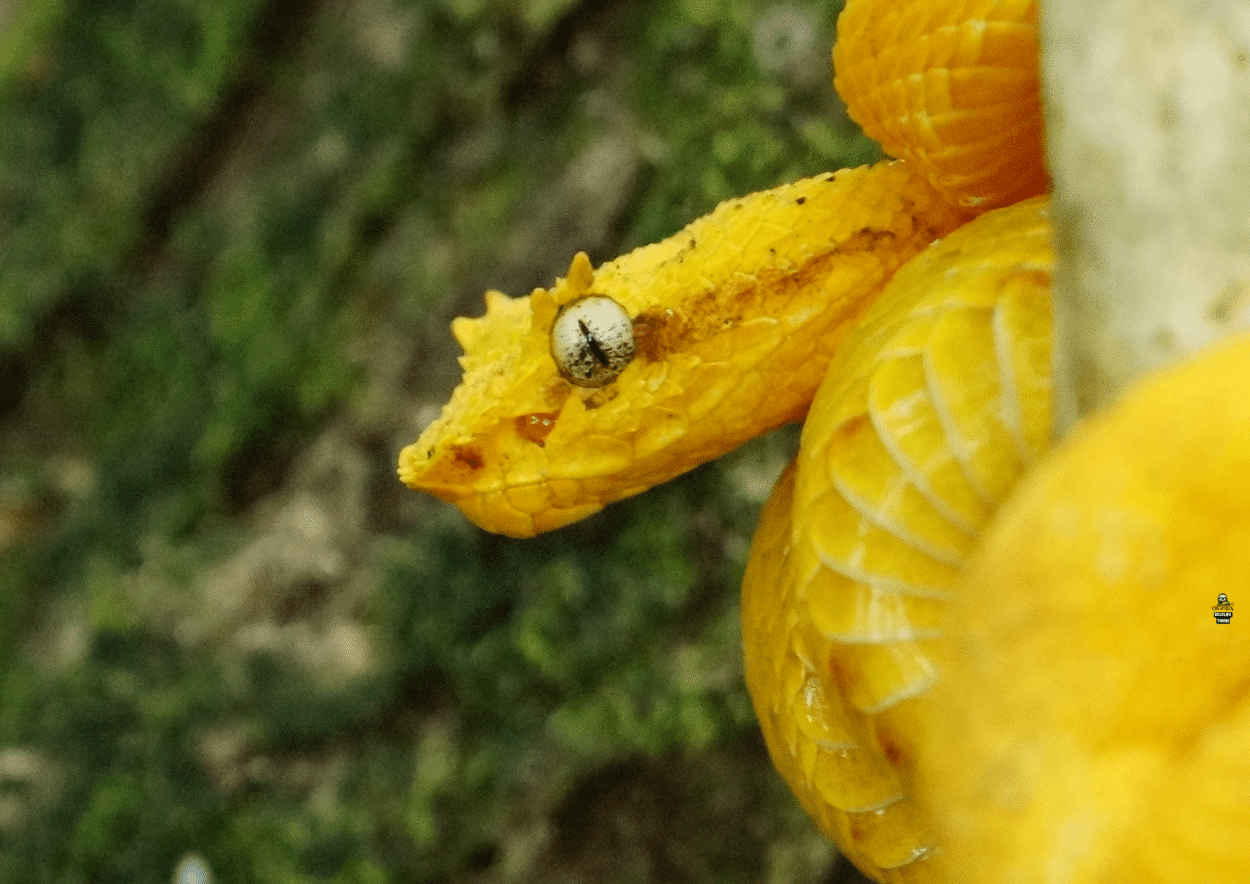
Snakes are an important part of the rainforest ecosystem. They help control populations of frogs, rodents, lizards and other small animals, and they are a natural part of a healthy tropical forest.
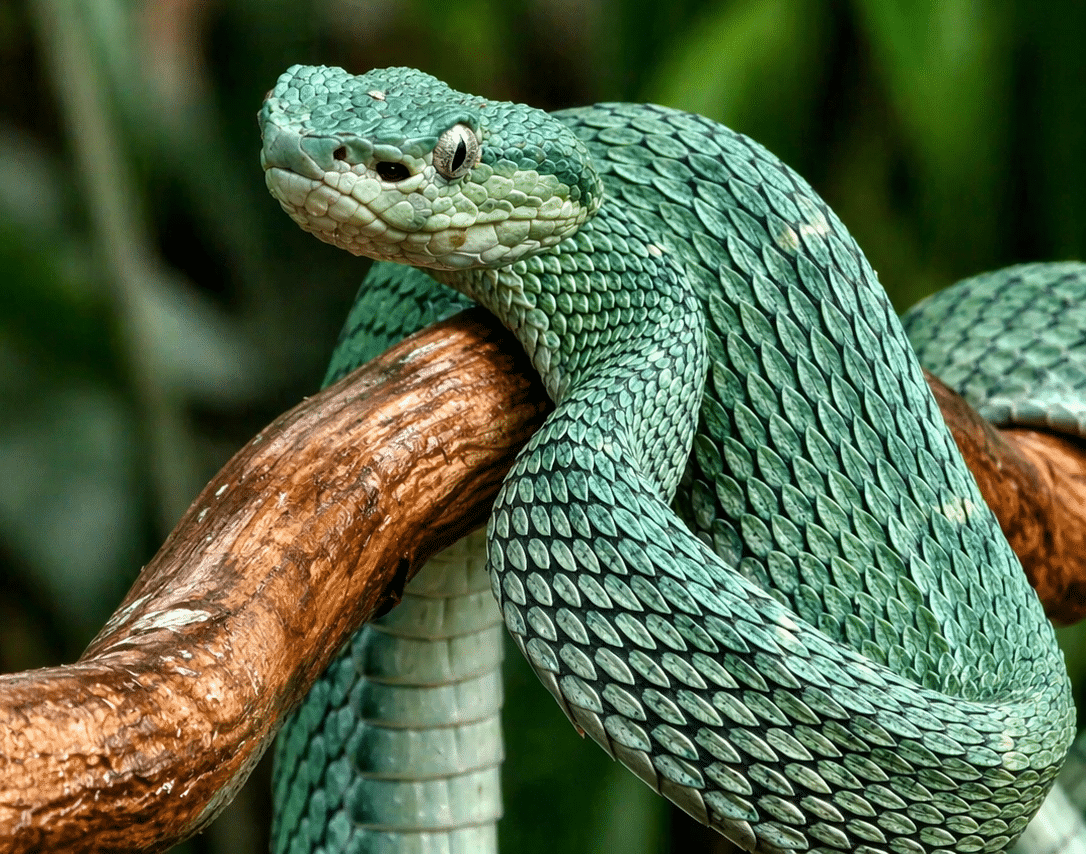
In the Caribbean lowlands, visitors may encounter both non-venomous and venomous species. Some notable snakes include Boa Constrictors, Blunt-headed Tree Snakes, Parrot Snakes, Vine Snakes, Cat-eyed Snakes and Eyelash Vipers. The Eyelash Viper is especially well known because of its beautiful coloration and its habit of resting on branches or vegetation. SINAC’s Cahuita information includes the Eyelash Viper among the terrestrial fauna of the park.
Snakes should always be observed from a safe distance and never touched, handled or disturbed. Most snakes do not want contact with people and will usually remain still, hide or move away when left alone. Respectful observation protects both visitors and wildlife.
A guided night walk is one of the best ways to learn about snakes responsibly. Many reptiles are more active after dark, and a trained naturalist guide knows where to look, how to identify species, and how to observe them safely without causing stress or risk. This makes the experience more educational, responsible and exciting for visitors interested in the hidden life of the rainforest.